
Team Stabilization & Alignment Blog

From Chaos to Consistency: Delivering a Unified Client Experience
Brand reputation in the B2B service sector is built on a single, uncompromising metric: predictability. When a company signs a contract, they are purchasing the certainty that you will solve their problem efficiently and professionally. If your internal teams are destabilized or lack alignment, that predictability shatters, and the client experience rapidly descends into chaos.
When service delivery relies on the individual tenure of employees rather than a standardized operational system, businesses create a fractured brand identity. Client A receives a white-glove, proactive experience because they happened to be assigned to a veteran account manager. Meanwhile, Client B receives reactive, disjointed service because they were assigned to a newer or misaligned team. This "luck of the draw" approach to service delivery is a massive liability for client retention and long-term scaling.
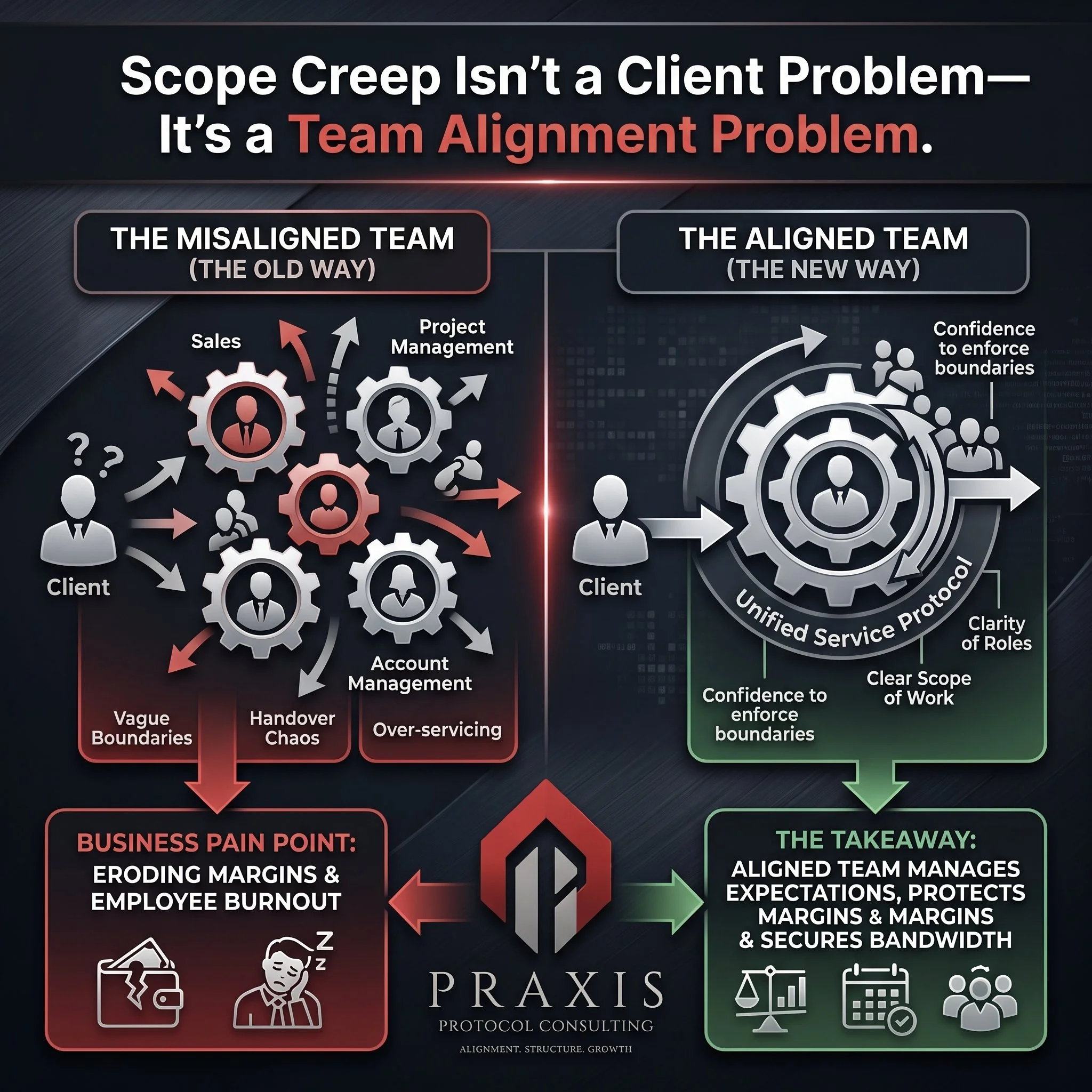
Scope Creep Isn't a Client Problem—It’s a Team Alignment Problem
Every service-based business knows the quiet devastation of scope creep. What starts as a "quick favor" or a minor revision soon snowballs into hours of unbilled work, drained resources, and frustrated employees. When profit margins erode and bandwidth disappears, the immediate reaction is almost always to blame a demanding, boundary-pushing client.
However, the truth is far more uncomfortable: scope creep is rarely a client problem. It is a symptom of internal team misalignment.
When your internal boundaries, project scopes, and handover processes are vaguely defined, you inadvertently train your clients to ask for more. Service businesses must recognize that clients will naturally push limits; it is the internal team's responsibility to manage those expectations confidently.
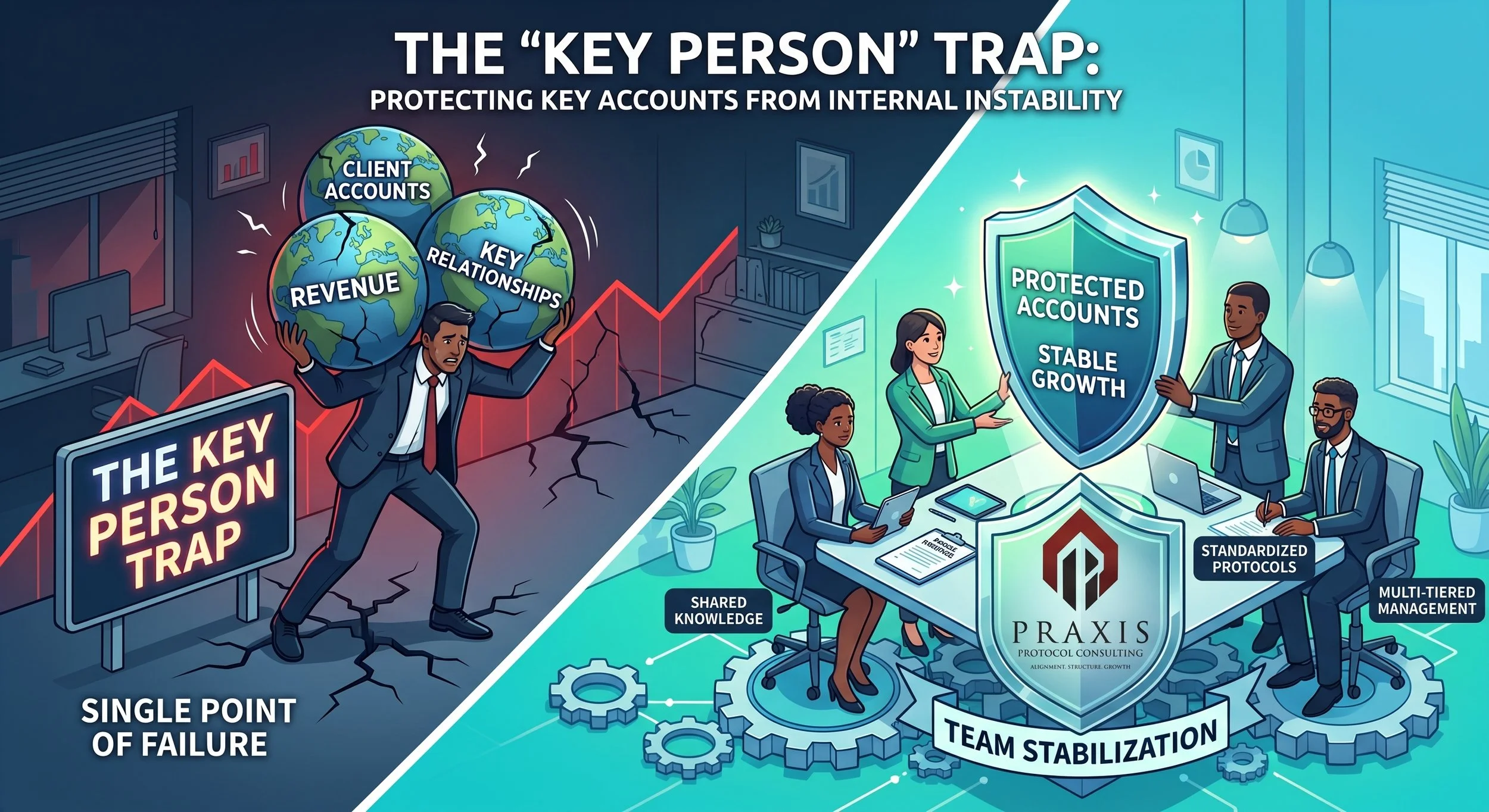
The "Key Person" Trap: How Internal Instability Puts Your Biggest Accounts at Risk
You just received a two weeks' notice from your senior consultant or lead account manager. The immediate concern for most service-based businesses in this scenario isn't just the cost of hiring a replacement—it is the sheer panic that your most lucrative client might walk out the door with them.
When a client relationship is tied exclusively to one individual rather than your company, you have created a single point of failure. In the consulting and B2B service sectors, turnover in client-facing roles is an inevitable reality. However, losing a major account because of that turnover does not have to be.
Protecting your revenue requires a fundamental shift in how you structure your service delivery. You must transition your organization away from relying on "individual heroism" and move toward a model of institutional excellence through team stabilization and alignment.
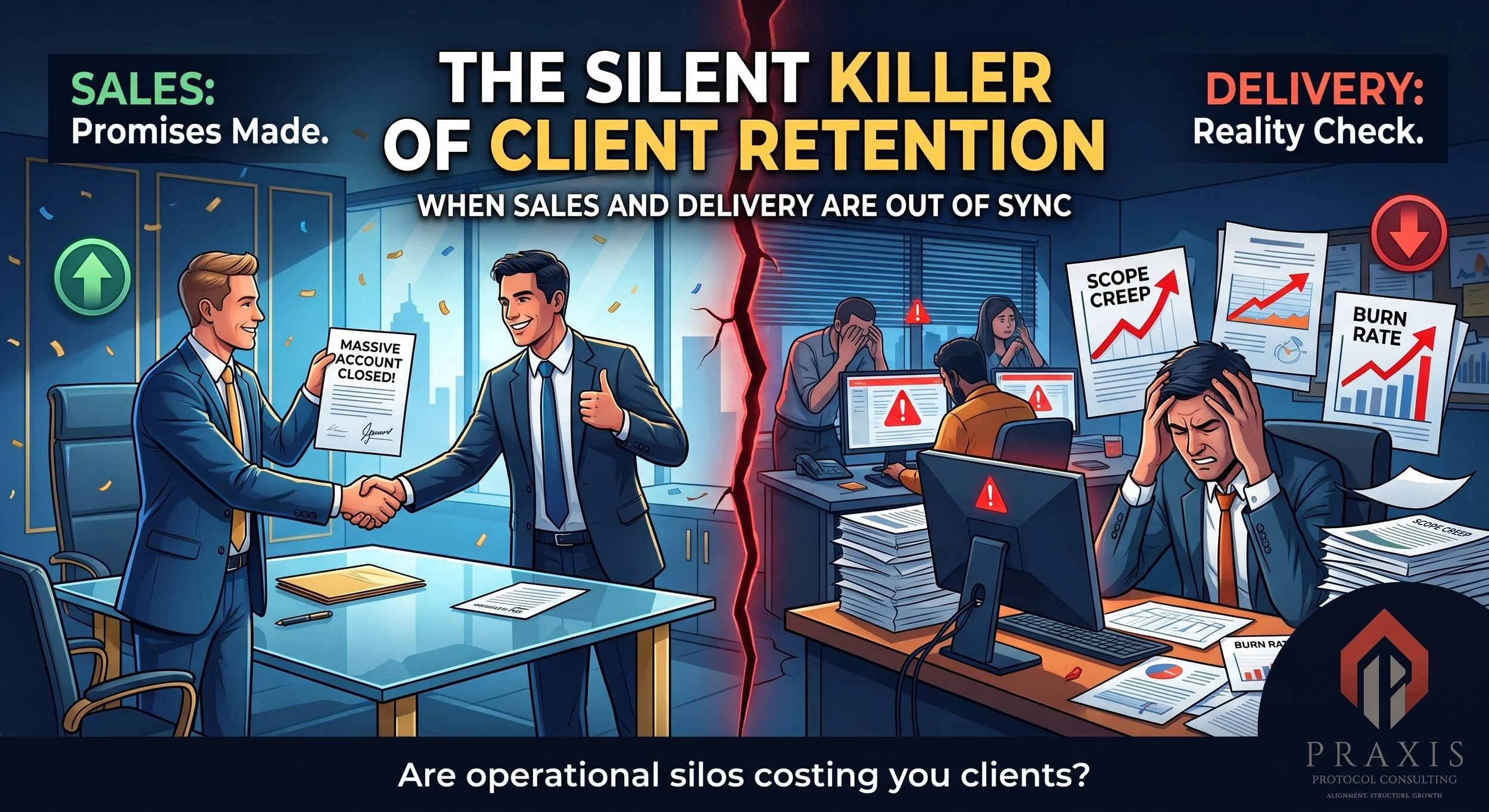
The Silent Killer of Client Retention: When Sales and Delivery Are Out of Sync
You just closed a massive account. Handshakes were exchanged, contracts were signed, and the revenue projections look fantastic. But within three months, the client is frustrated, your service delivery team is burned out, and the account is at high risk of churn.
What went wrong?
In service-based businesses and corporate consulting, the root cause of client churn rarely comes down to a poor product. Instead, it stems from a structural disconnect: sales and delivery are completely out of sync.
When the revenue-generating engine makes promises that the service execution team cannot realistically fulfill, you create an "expectation gap." Bridging this gap requires deep team stabilization and cross-departmental alignment. Here is how misaligned teams secretly destroy client retention—and how you can fix it.